
The processes we master.
Six families, 164 processes: the building blocks of every machine we design. Open a family’s drawers to see each process we can build into your machine, alone or combined with others. Where a process runs on a specialist’s unit, such as an ultrasonic generator or a leak tester, we select it, integrate it and answer for the complete machine.
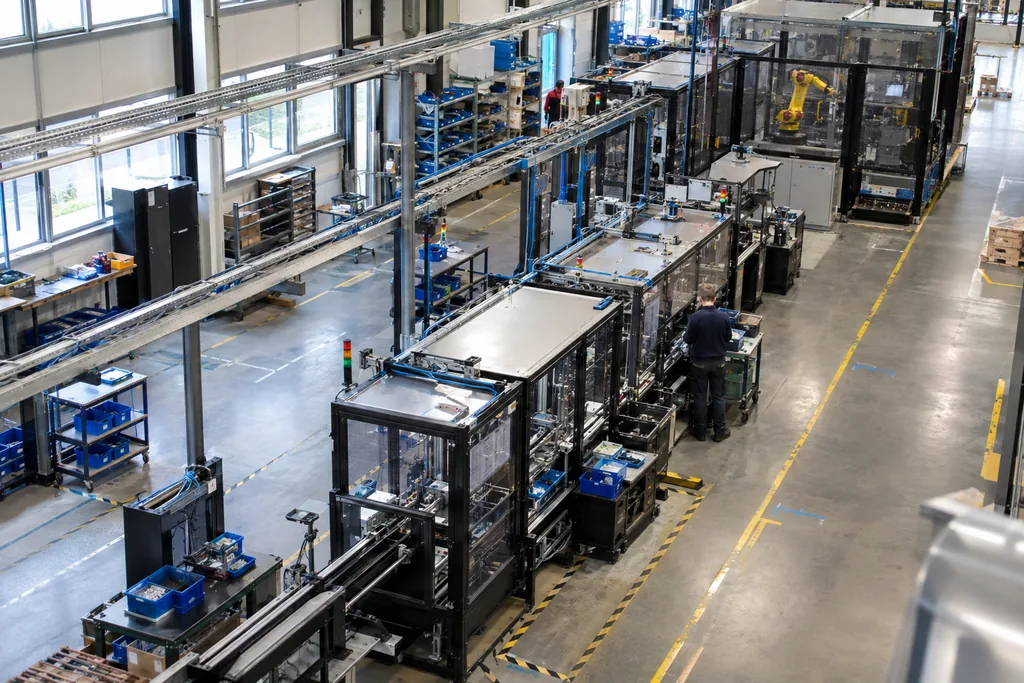


ASSEMBLE
Puts your components together: located, pressed, screwed and fixed in a repeatable sequence.
Your product arrives as separate components and has to leave as one assembly, with each component in its correct position, cycle after cycle. We design and build the fixtures that locate and clamp the parts, then integrate screwdriving, press-fitting and robotic or cobot-assisted assembly around them, from a single station to a complete assembly system.
Where it is used
- Technical & blow-moulded plastics: robotic assembly of moulded plastic parts, with screwdriving and press-fitting stations.
- Electrical equipment: assembly of electrical and appliance components, ahead of functional testing.
- Industrial products: retrofit of existing robotic assembly lines, from obsolete controls to complete robotic system upgrades.
Processes in this family24 processes
Screwdriving & threaded fastening4 processes
- Screwdriving
- Multi-spindle screwdriving and nutrunning
- Automatic screw feeding (blow-feed or presenter pick-up)
- Thread-forming screwdriving into plastics
Pressing6 processes
- Pressing and press-fitting (servo, pneumatic and hydropneumatic presses)
- Press-in of threaded and brass inserts
- Bearing, bushing and sleeve pressing
- Pin, dowel and press-fit contact insertion
- Shaft, gear and hub pressing
- Shrink fitting (induction heating or cooling)
Insertion & component fitting8 processes
- Snap-fit and clip assembly
- O-ring and seal fitting
- Circlip and retaining-ring fitting
- Spring assembly (compression, torsion, pre-loaded)
- Gasket, grommet, plug and cap insertion
- Hose-clamp and ear-clamp closing
- Connector mating, cable and hose connection
- Placement of electrical contacts and terminals
Robotic assembly2 processes
- Robotic assembly
- Cobot-assisted assembly
Auxiliary operations3 processes
- Greasing, oiling and lubricant dosing
- Adjustment and setting (spring force, gap, switching point)
- Shim selection and fitting (gap compensation)
Assembly fixtures1 process
- Fixture design and build, variant nests with quick changeover
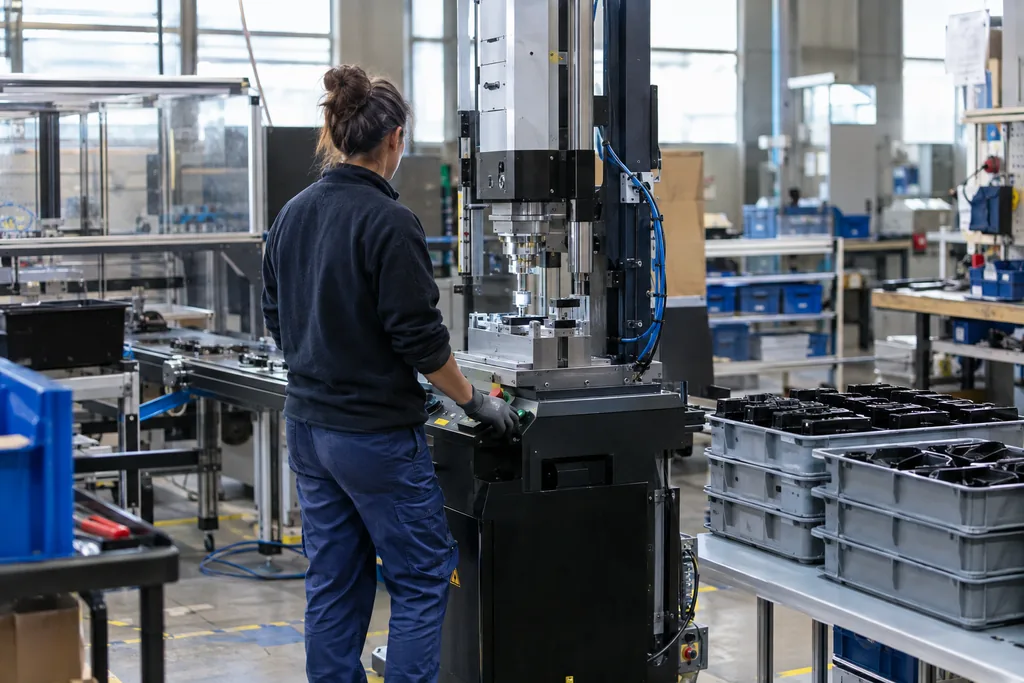

JOIN
Makes permanent joints in metal and plastic parts by welding, riveting, bonding or sealing.
Parts of the same or different materials have to be joined permanently, and the joint has to carry its load or seal where the product requires it. We select the joining method from the materials and the joint requirement, then design the welding fixtures, tooling and dispensing equipment that hold the parts and make the joint, for robotic or manual stations.
Where it is used
- Automotive components: resistance spot welding of metal sub-assemblies, and riveting where lightweight or dissimilar materials meet.
- Automotive components: welding fixtures and tooling designed and built for robotic and manual welding stations.
- Technical & blow-moulded plastics: ultrasonic welding of plastic parts, adhesive bonding, sealing and dispensing.
Processes in this family38 processes
Resistance welding3 processes
- Resistance spot welding
- Projection welding of nuts and studs
- Seam welding
Arc welding & brazing5 processes
- Robotic MIG/MAG welding
- Robotic TIG welding
- Arc stud welding (drawn arc, short cycle)
- Brazing (MIG brazing, induction brazing)
- Selective and induction soldering
Plastic welding5 processes
- Ultrasonic welding
- Infrared welding
- Vibration welding
- Spin welding
- Laser welding of plastics (transmission)
Staking & inserts5 processes
- Heat staking (heated punch)
- Hot-air and cold staking
- Infrared staking
- Ultrasonic staking and swaging
- Heat-set and ultrasonic insert embedding
Mechanical joining10 processes
- Riveting
- Self-pierce riveting (SPR)
- Blind riveting
- Rivet nut and rivet stud setting
- Orbital and radial riveting
- Clinching
- Self-clinching nut and stud installation
- Hemming (robotic roller, table-top)
- Crimping of terminals, ferrules and hose fittings
- Metal staking and peening (caulking)
Adhesive bonding & sealing8 processes
- Adhesive bonding
- Bead and dot dispensing, sealing
- 1K and 2K metering and mixing
- Hot-melt dispensing
- Formed-in-place gaskets (FIPG) and foam gaskets (FIPFG)
- Potting and encapsulation
- Adhesive tape, pad and patch application
- UV and IR curing
Welding tooling & BIW sub-assembly2 processes
- Welding fixtures and tooling
- Body-in-white (BIW) sub-assembly
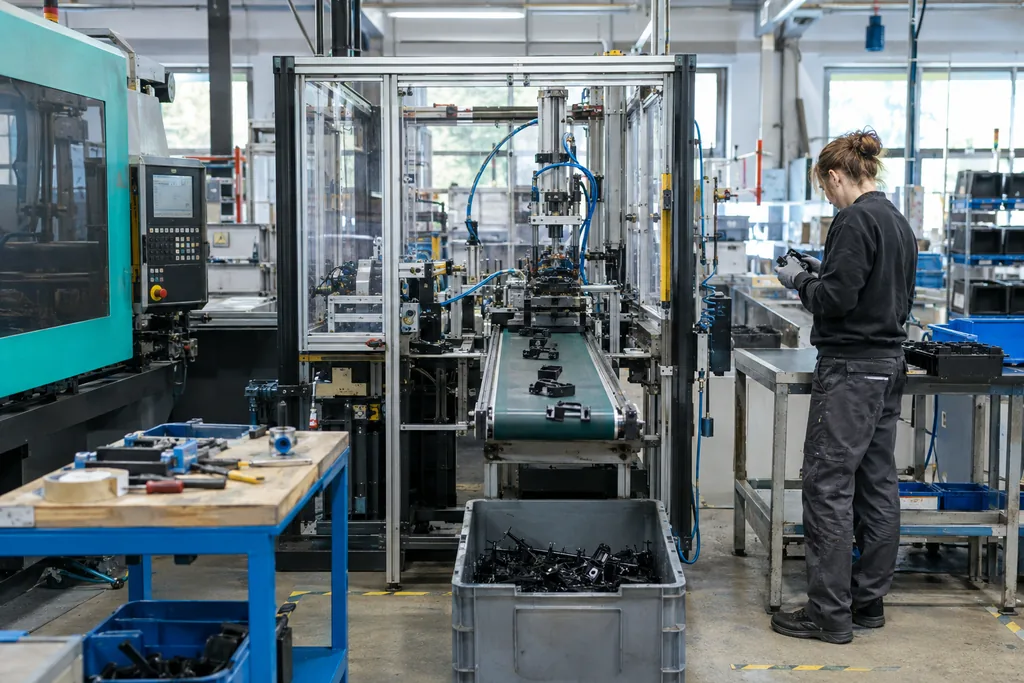
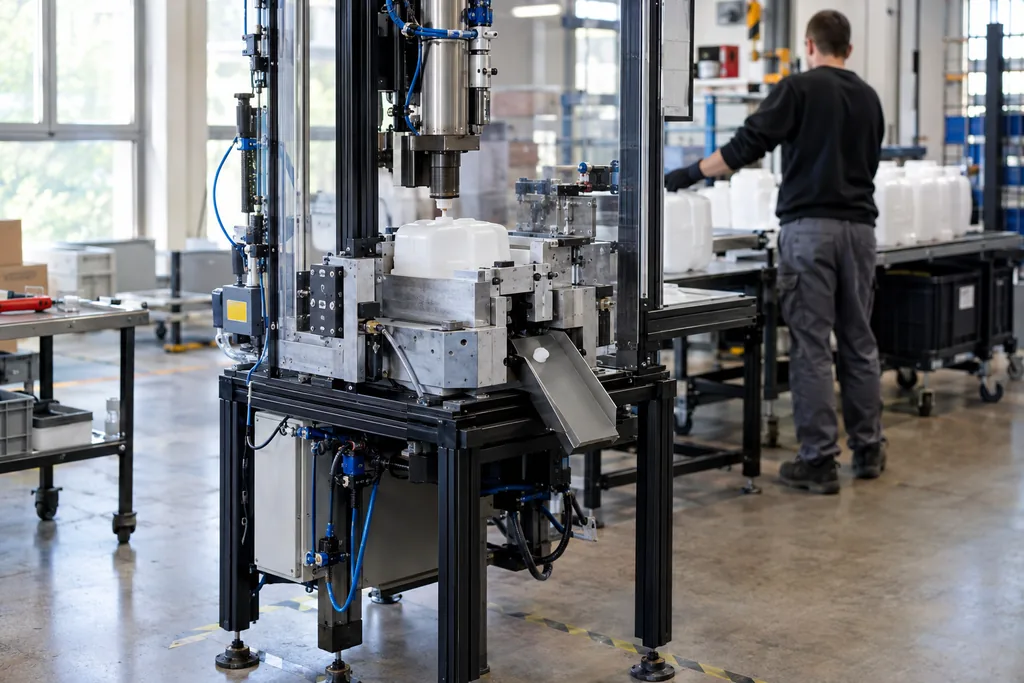
SHAPE
Cuts, machines and forms your parts: removes gates, trims edges, punches holes and prepares surfaces.
A part often reaches the machine with gates to remove, edges to trim, holes still to add or a surface to prepare. We integrate degating, trimming, punching, in-line machining, forming and surface preparation into the machine, with the part held in a fixture designed for its geometry, so it reaches the next operation in its final form.
Where it is used
- Technical & blow-moulded plastics: degating of moulded parts, milling and trimming of edges and openings.
- Technical & blow-moulded plastics: punching and piercing of holes and openings.
Processes in this family20 processes
Post-mould finishing7 processes
- Degating: separating parts from sprues and runners (in a station or in the gripper)
- Deflashing of blow-moulded parts
- Milling and trimming
- Hot-knife trimming
- Ultrasonic cutting
- Punching and piercing
- Deburring and edge breaking
Cutting1 process
- Cut-to-length of hoses, tubes and profiles
In-line machining4 processes
- Drilling
- Tapping and thread forming
- Reaming and countersinking
- Robotic grinding and polishing
Forming4 processes
- Tube bending, wire and tab bending
- Flaring and tube-end forming
- Embossing and coining
- Straightening
Surface preparation4 processes
- Cleaning and blow-off
- CO2 snow cleaning
- Static elimination (ionized-air blow-off)
- Plasma, corona and flame treatment

HANDLE
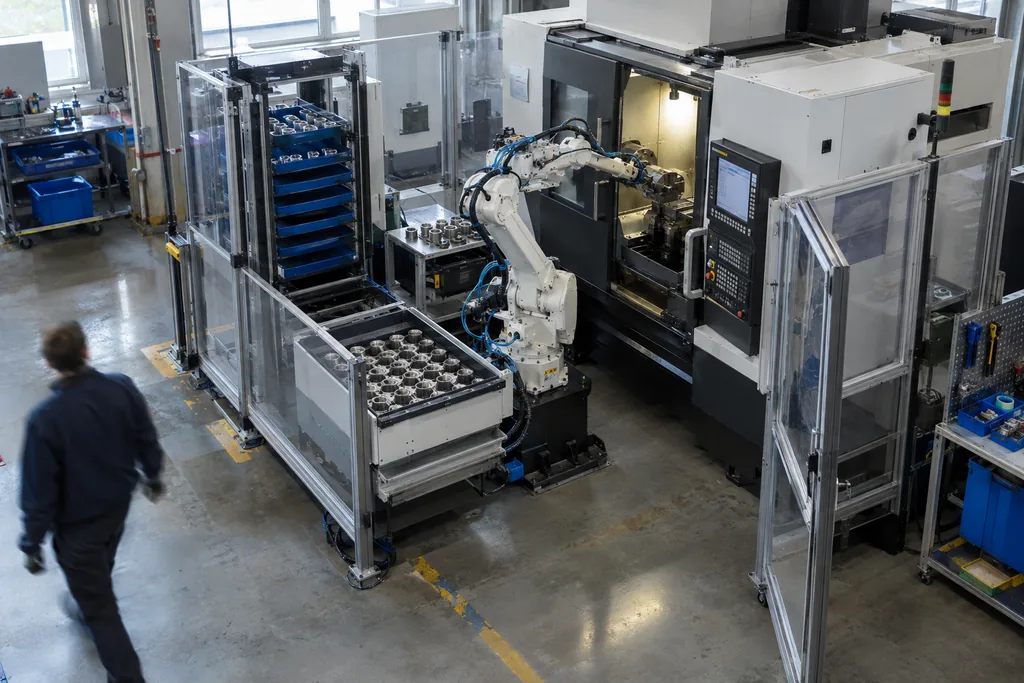
Moves, feeds, picks and stacks your parts between operations, from the first station to the pallet.
Parts have to reach each operation in the right orientation, move between stations and leave the line, without manual lifting becoming the bottleneck. We engineer that flow into the machine: part feeding, conveying, vision-guided bin picking, machine tending, depalletizing and palletizing, with grippers and end-of-arm tooling designed for your part. The scope runs from standard roller conveyors to fully automated robotic palletizing cells.
Where it is used
- Industrial products: conveying systems, depalletizing and robotic end-of-line palletizing cells that replace repetitive manual lifting.
- Automotive components: vision-guided bin picking of randomly placed metal parts to feed the production line.
- Technical & blow-moulded plastics: part feeding with vibratory bowl feeders, robot handling between stations and machine tending.
Processes in this family32 processes
Part feeding7 processes
- Vibratory bowl feeders
- Linear feeders and escapements
- Step feeders
- Flexible feeders with vision
- Hoppers and bulk elevators
- Tray and blister handling, tray stackers
- Tape-and-reel and magazine feeding
Robotic handling4 processes
- Pick-and-place (Cartesian, SCARA, delta, gantry)
- Vision-guided bin picking
- Vision-guided robot positioning (2D/3D, on conveyors and in fixtures)
- Machine tending (presses, injection moulding machines, CNC machine tools)
Transfer between stations5 processes
- Rotary indexing tables
- Linear indexing transfer
- Pallet (workpiece-carrier) transfer systems
- Walking-beam and shuttle transfer
- AGV and AMR interfaces
Conveying4 processes
- Roller, belt and chain conveyors
- Accumulation and buffers
- Lifts and vertical conveyors
- Turntables, diverters and merges
Orientation & turnover3 processes
- Positioners, turnover units and rotators, including for welding
- Orientation stations
- Ergonomic lift assists and manipulators
End of line6 processes
- Robotic palletizing
- Depalletizing
- Interlayer and slip-sheet placement
- Loading finished parts into boxes and returnable containers
- Stretch wrapping and strapping
- OK/NOK sorting and reject outlets
End-of-arm tooling3 processes
- Mechanical grippers and custom end-of-arm tooling
- Tool changers
- Vacuum, magnetic and needle grippers
INSPECT
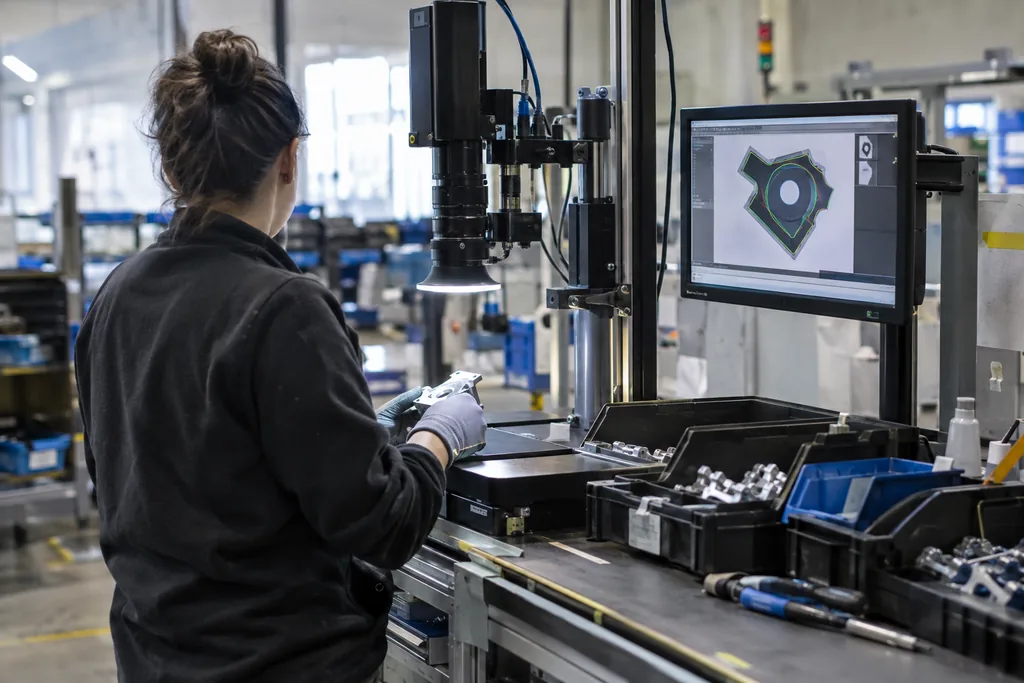
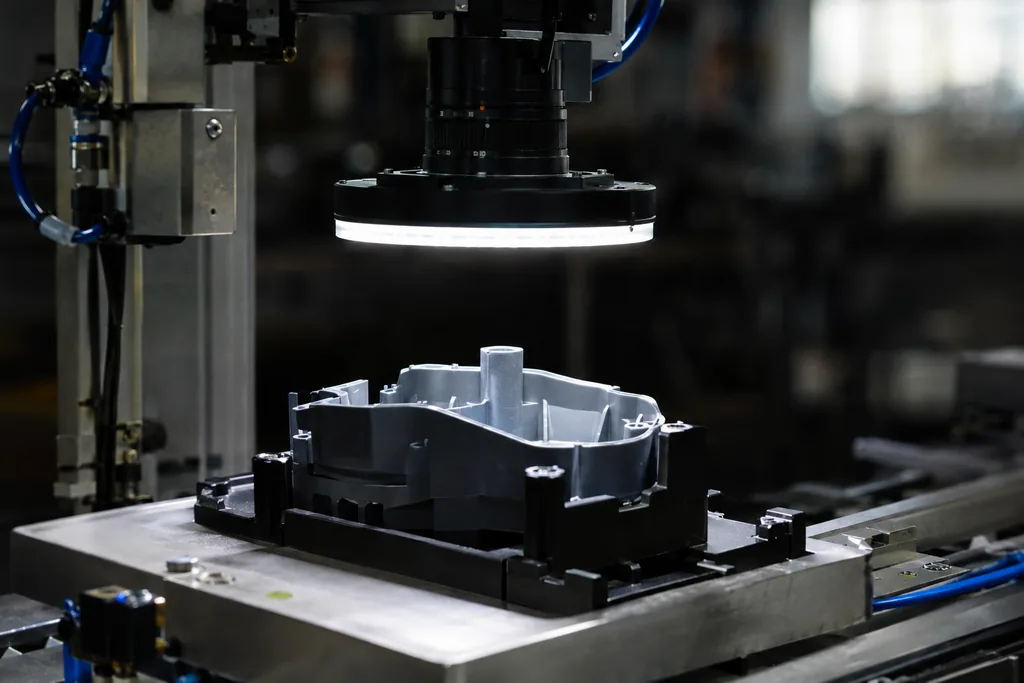
Checks your parts for defects, dimensions and correct assembly: cameras, laser sensors, gauges and in-process monitoring.
Defects, dimensional deviations and missing or misplaced components have to be found before the part moves on to the next operation. We place inspection where a fault can still be detected and the part rejected: vision for defects, measurement and assembly verification, laser sensors and gauges for dimensions, and in-process monitoring of force, torque, weld parameters or dispensed volume, from a check inside a station to a standalone inspection station. Inspection can also be retrofitted into an existing line.
Where it is used
- Technical & blow-moulded plastics: in-line vision inspection of moulded plastic components.
- Electrical equipment: assembly verification and inspection of components before test.
- Automotive components: vision checks within the welding and assembly of metal sub-assemblies.
Processes in this family20 processes
2D vision6 processes
- Presence and position checks (assembly verification)
- Surface defect detection
- Camera-based dimensional measurement
- Variant and orientation identification
- Colour inspection
- Character reading and label verification (OCR/OCV)
3D vision & laser measurement4 processes
- 3D inspection
- Height, gap and flush measurement (laser sensors, profilometers)
- Adhesive and sealant bead inspection
- Weld inspection
In-process monitoring6 processes
- Force–displacement monitoring (pressing, riveting, clinching)
- Torque–angle monitoring (screwdriving)
- Weld parameter monitoring
- Dispensed volume monitoring
- Weight checking (completeness, dispensed or filled quantity)
- Sensor-based presence checks
Dimensional gauging2 processes
- Probe and LVDT gauging
- Air gauging
Station types2 processes
- In-line and standalone inspection stations
- Inspection added to existing lines
TEST & TRACE
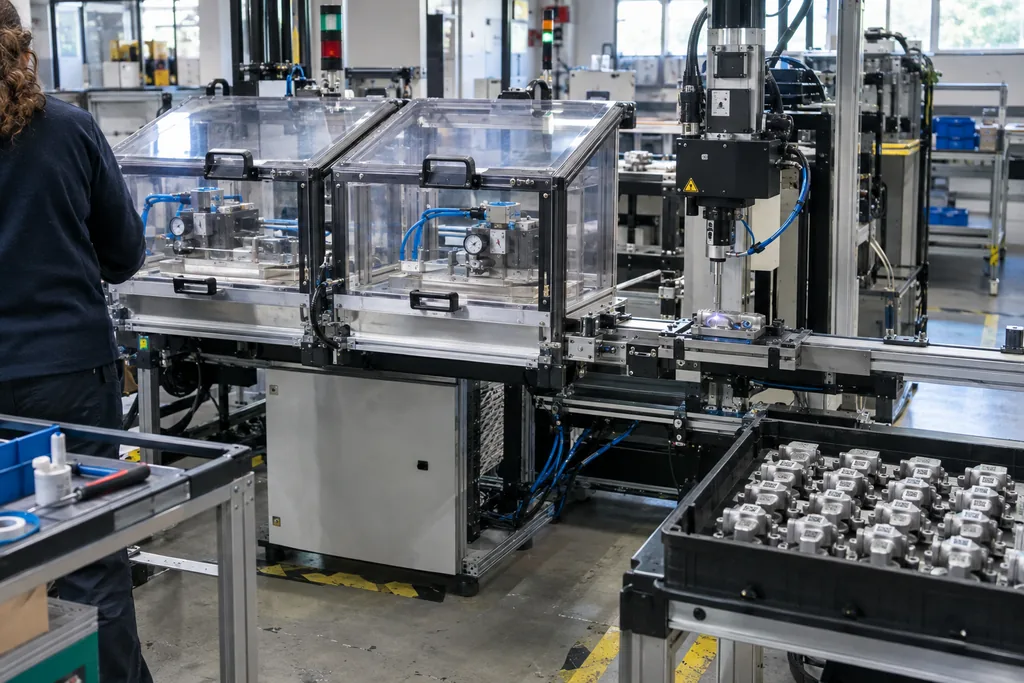
Tests each part for leaks and function, marks it and records its data so it can be traced.
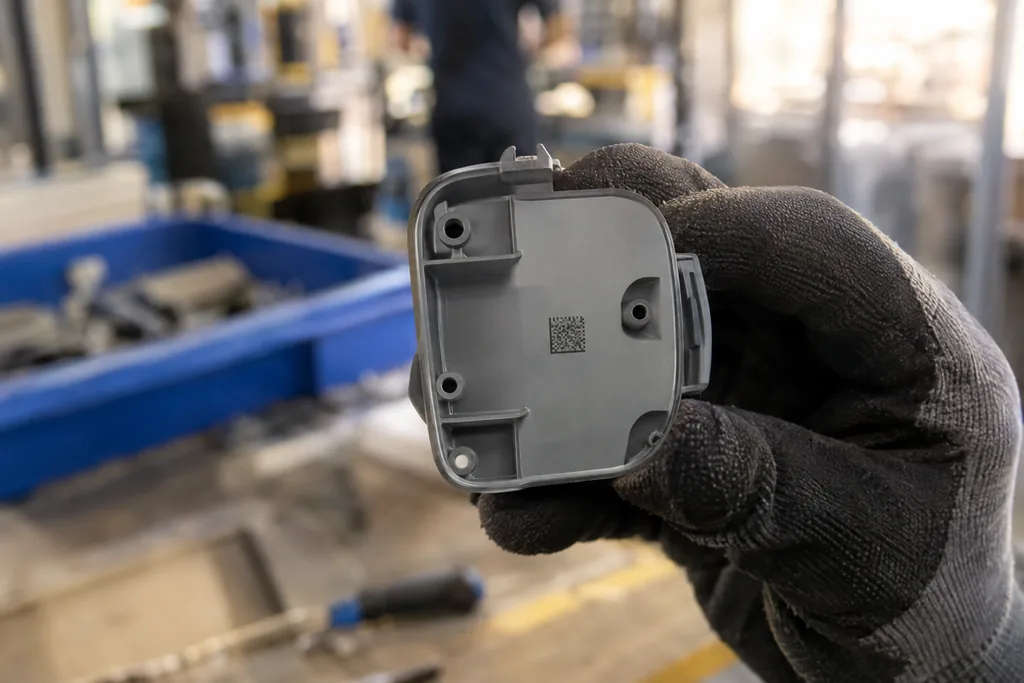
Each finished part has to be proven tight and functional, and it has to remain identifiable once it leaves the line. We build leak testing and functional testing into the machine, mark each part for identification, and record the results per part for traceability and line supervision.
Where it is used
- Technical & blow-moulded plastics: leak testing of hollow and blow-moulded parts, with marking for identification.
- Electrical equipment: functional testing at the end of assembly, with component traceability.
Processes in this family30 processes
Leak testing5 processes
- Pressure decay (relative, differential)
- Mass flow
- Vacuum decay
- Burst and proof-pressure testing
- Flow testing
Functional testing4 processes
- Actuation tests (force, travel, switching point)
- Valve and motor run tests
- Torque testing
- Pull-out, push-out and joint strength tests
Electrical testing4 processes
- Continuity testing
- Insulation resistance testing
- Resistance, current and voltage measurement
- PCB and ECU programming (flashing)
Part marking6 processes
- Laser marking (fibre, CO2, UV)
- Dot peen marking
- Inkjet printing
- Print-and-apply labelling
- Hot-foil stamping
- Engraving
Identification3 processes
- DataMatrix, QR and barcode reading
- Code quality grading
- RFID on workpiece carriers
Data & traceability8 processes
- Part-by-part traceability records
- Serialization and component genealogy
- Line supervision and OEE
- SPC and process capability reporting (Cp, Cpk)
- MES and ERP interfaces
- Recipe and variant management
- Poka-yoke, sequence interlocks and quality gates
- Rework stations
One machine. Multiple processes.
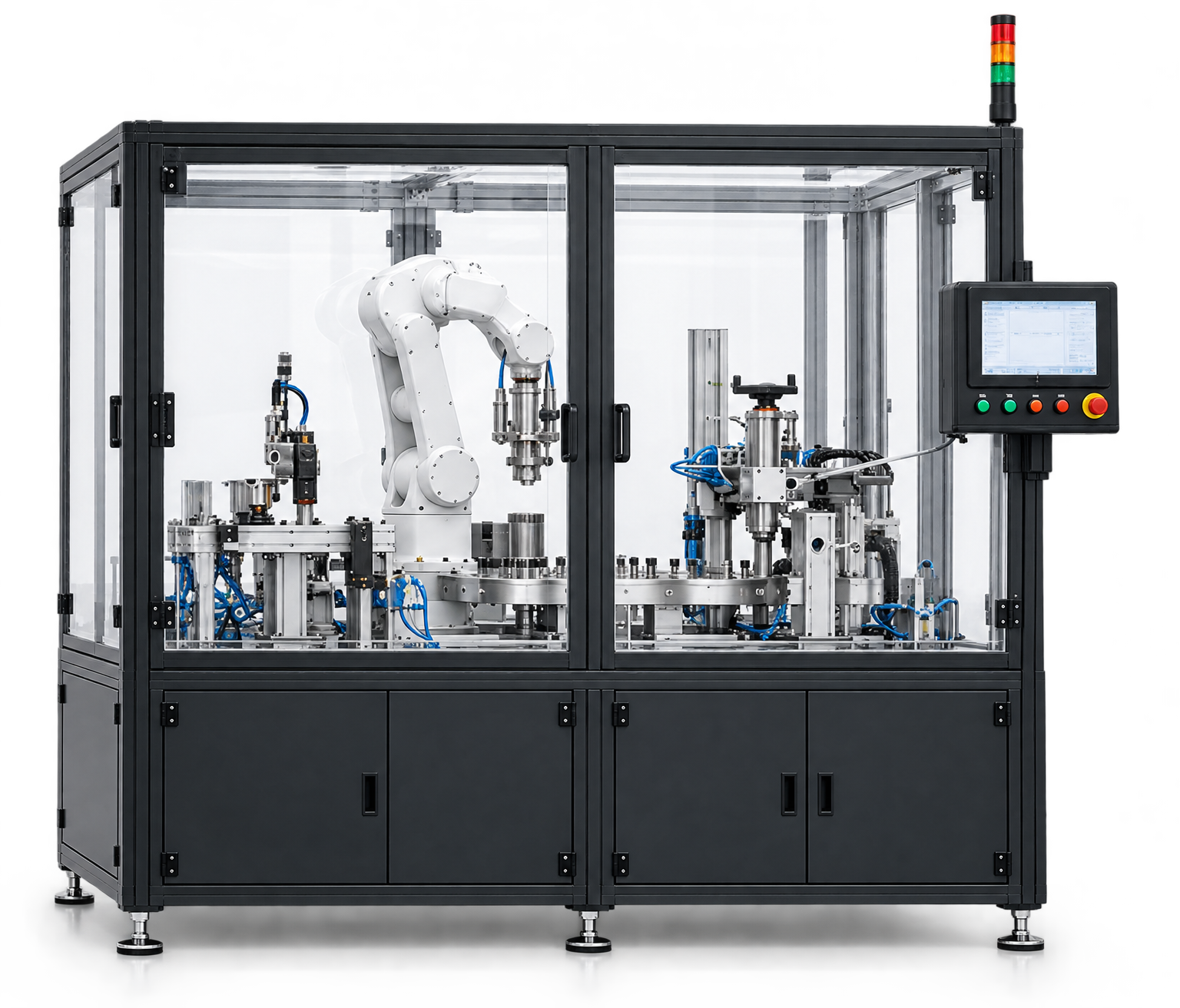
Most parts need several operations. When each one runs on a separate machine, every transfer adds handling, buffering and another point where the part can be damaged, mispositioned or mixed up.
We combine the families your part needs into one custom production system: one part flow, one control system and one responsibility from requirement to ramp-up. The process defines the machine — not the other way around.
Illustrative sequence
- HANDLE
- SHAPE
- ASSEMBLE
- JOIN
- INSPECT
- TEST & TRACE
- HANDLE
Not a specific project: a single cell for a moulded plastic housing might take the part from a conveyor (HANDLE), degate it (SHAPE), press in a metal insert (ASSEMBLE), ultrasonically weld a cover (JOIN), check the assembly by camera (INSPECT), then leak test and mark it (TEST & TRACE) before placing it on the outfeed conveyor (HANDLE).
Technologies we integrate
Components and systems from these manufacturers are integrated in CBWEE Europe machines, chosen for the task or to your plant standards.
- Robots
- FANUC
- ABB
- KUKA
- ESTUN
- Controls & drives
- Siemens
- Allen-Bradley
- Beckhoff
- B&R
- Schneider Electric
- SEW-EURODRIVE
- Bosch Rexroth
- Pneumatics
- Festo
- SMC
- Safety & guarding
- SICK
- Pilz
- EUCHNER
- Troax
- Axelent
- Grippers & vacuum
- SCHUNK
- Zimmer Group
- Gimatic
- DESTACO
- Conveying & indexing
- Bosch Rexroth
- WEISS
- Screwdriving
- Atlas Copco
- DEPRAG
- Press-fit & force monitoring
- Kistler
- Plastic welding
- Dukane
- Metal welding
- Fronius
- ARO Welding Technologies
- Dispensing & sealing
- Nordson
- Atlas Copco
- DOPAG
- Vision
- Cognex
- KEYENCE
- SICK
- Mech-Mind
- Measurement
- KEYENCE
- Leak & electrical testing
- ATEQ
- CETA
- Marking & identification
- KEYENCE
- Datalogic
- Videojet
- Gravotech
- SIC Marking
- Zebra Technologies
Brand names belong to their respective owners. Listing them does not imply a partnership or endorsement.
Start with your part and its process.
Describe the part, the operations it needs and the volumes you plan. We propose the combination of process families and the machine built around it.