
Special-purpose machines, built to order.
Every machine we deliver is designed for one product and its process. These are the ten types of machine we design and build, from a single station to a complete line. Most combine processes from several families in one machine.
Assembly machines
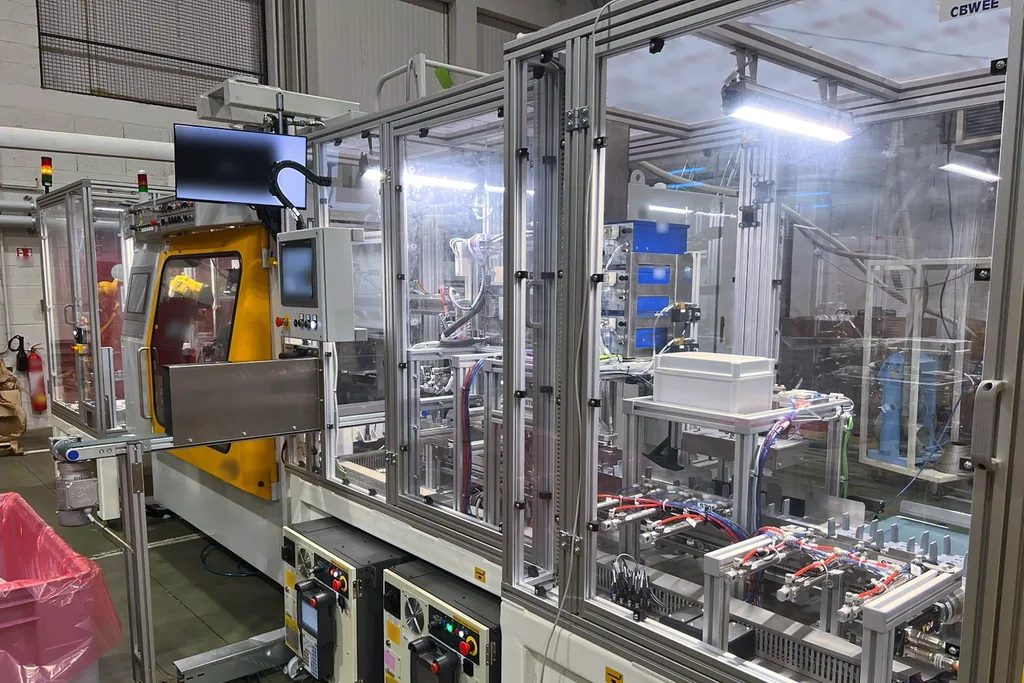
Machines that press, screw, insert and fit the components of your part, from a single station loaded by an operator to a multi-station machine on a rotary index table or linear transfer. Part feeding, in-process monitoring, testing and marking are built into the same machine.
Typical processes
Process families involved

Robotic cells
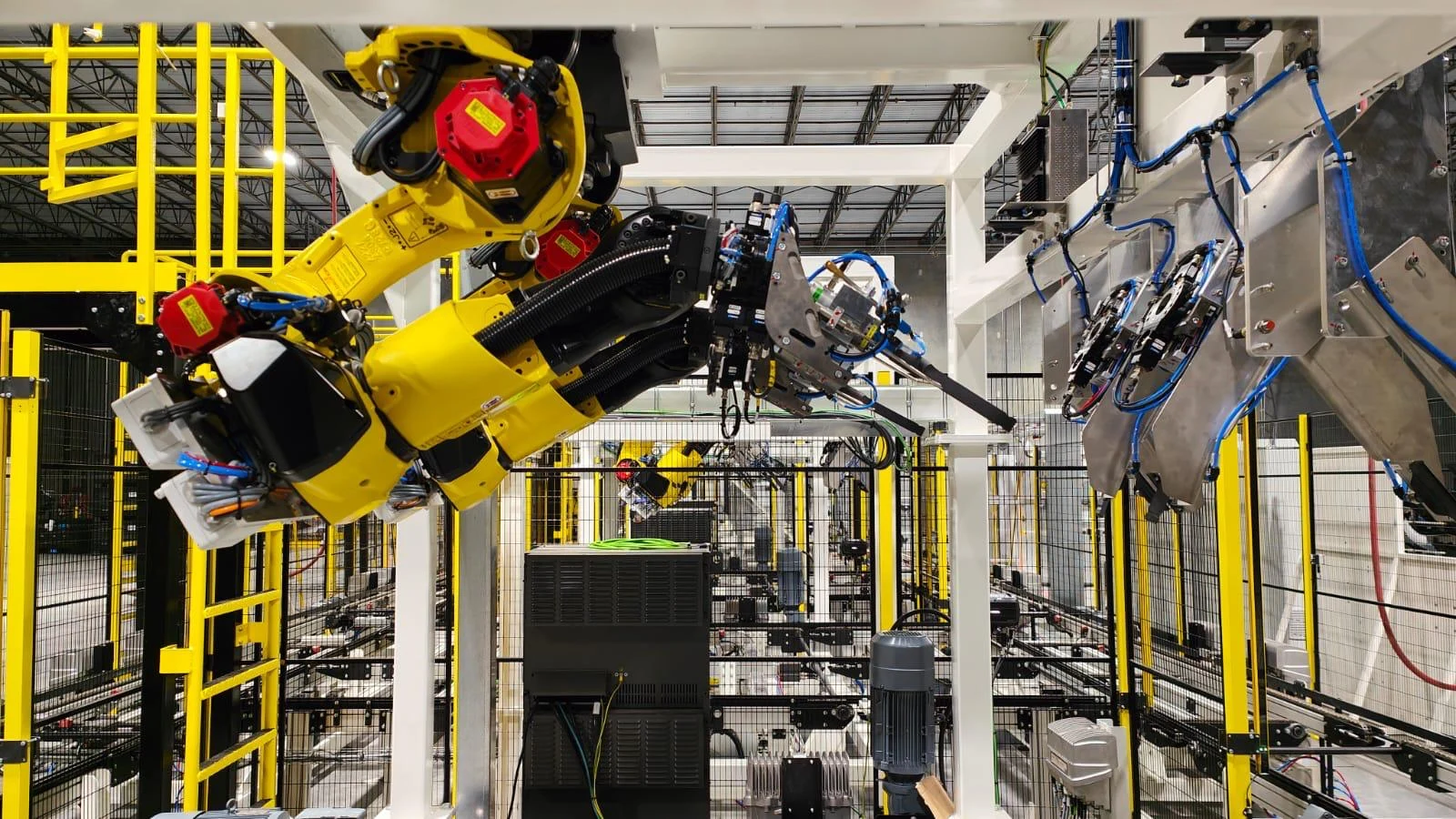
Cells built around one or more robots and the process your part needs: spot and arc welding, riveting and clinching, bonding and bead dispensing, assembly and screwdriving, bin picking, deburring and grinding, inspection and marking. The robot, its end-of-arm tooling, the fixtures and the guarding are designed together as one cell.
Typical processes
Test and inspection machines
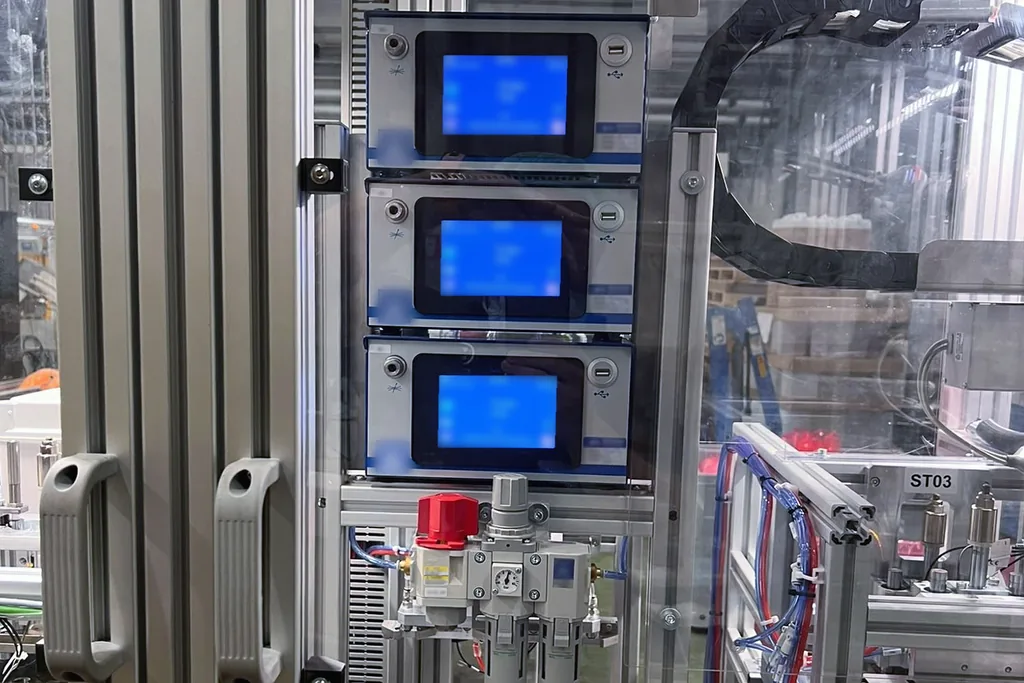
Stations and test benches that check every part before it leaves: leak testing, functional and electrical tests, vision inspection and gauging. Each result is recorded against the part, and good and rejected parts are marked and sorted.
Typical processes
Process families involved
Production lines and transfer systems
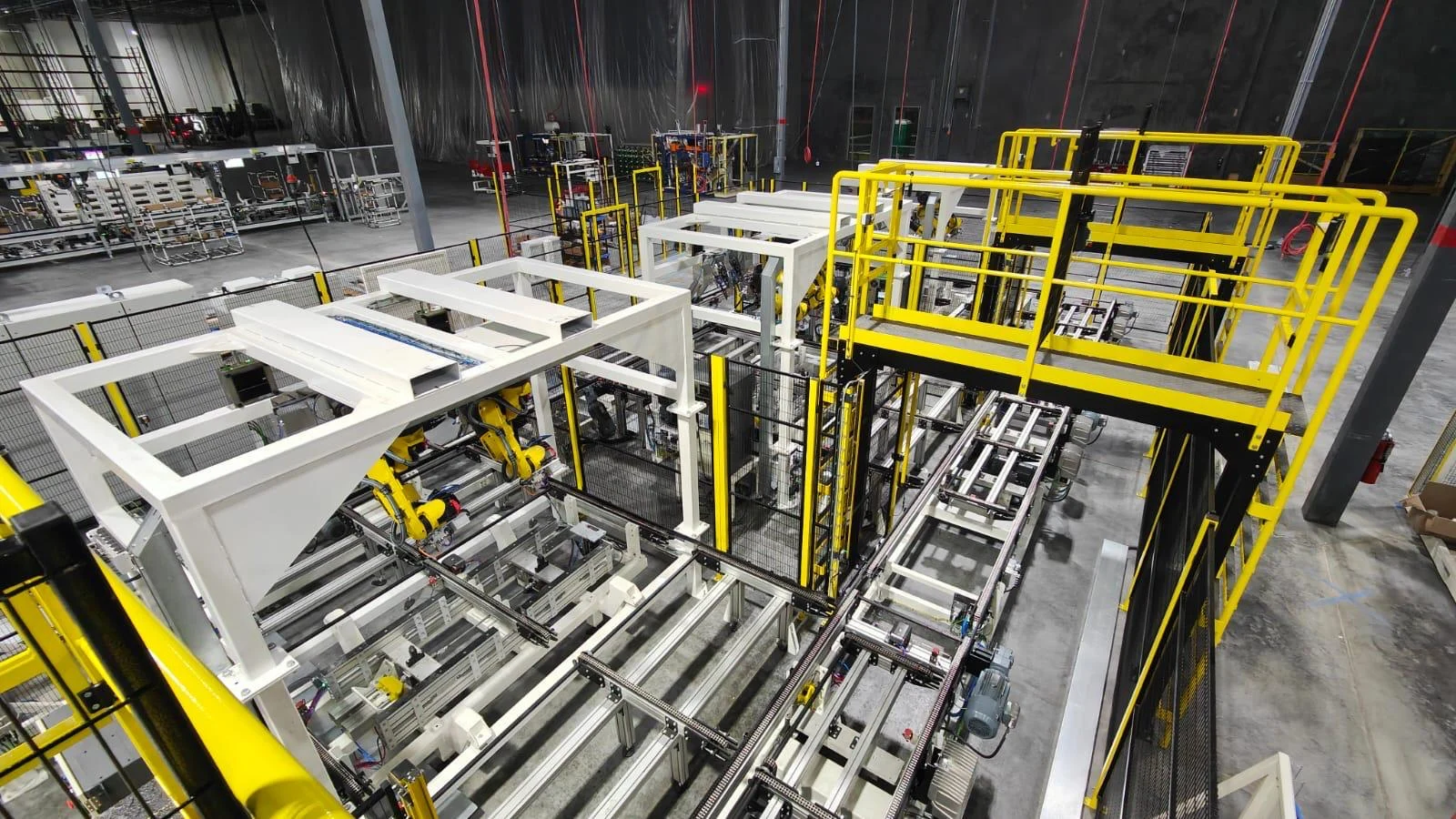
Several machines or cells linked by conveyors or a pallet transfer system and run by one control system. One team designs the complete line, and one company answers for it from the first review to ramp-up.
Typical processes
Process families involved
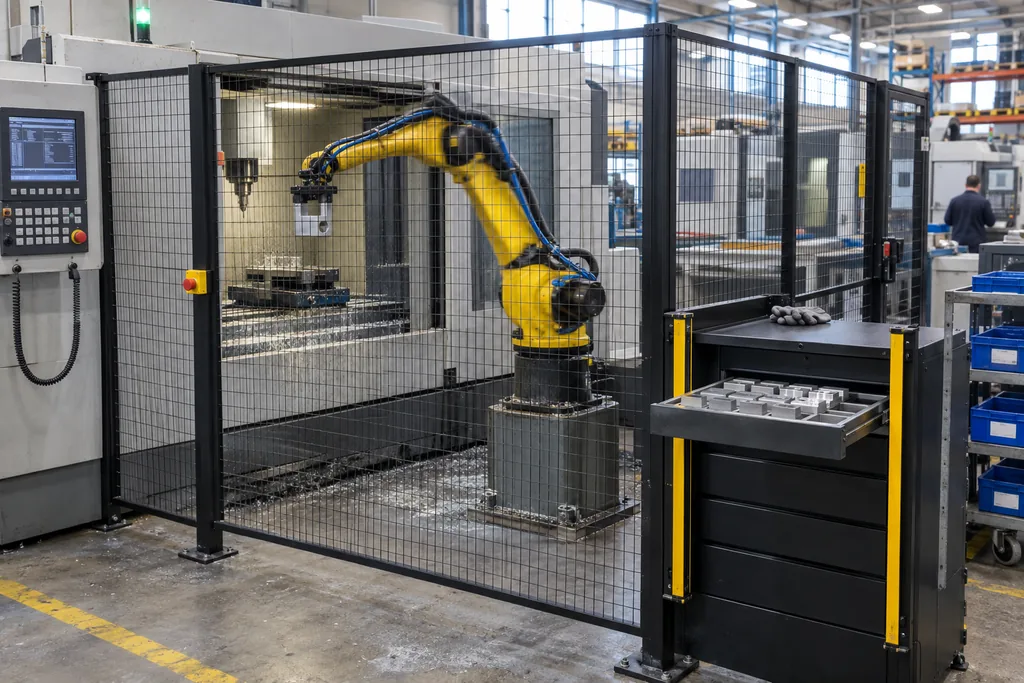
Machine tending and bin picking cells
Robot cells that load and unload your presses, injection moulding machines and machine tools, or pick parts from bulk with 3D vision. The cell checks and orients each part, then places it for the next operation.
Typical processes
Process families involved
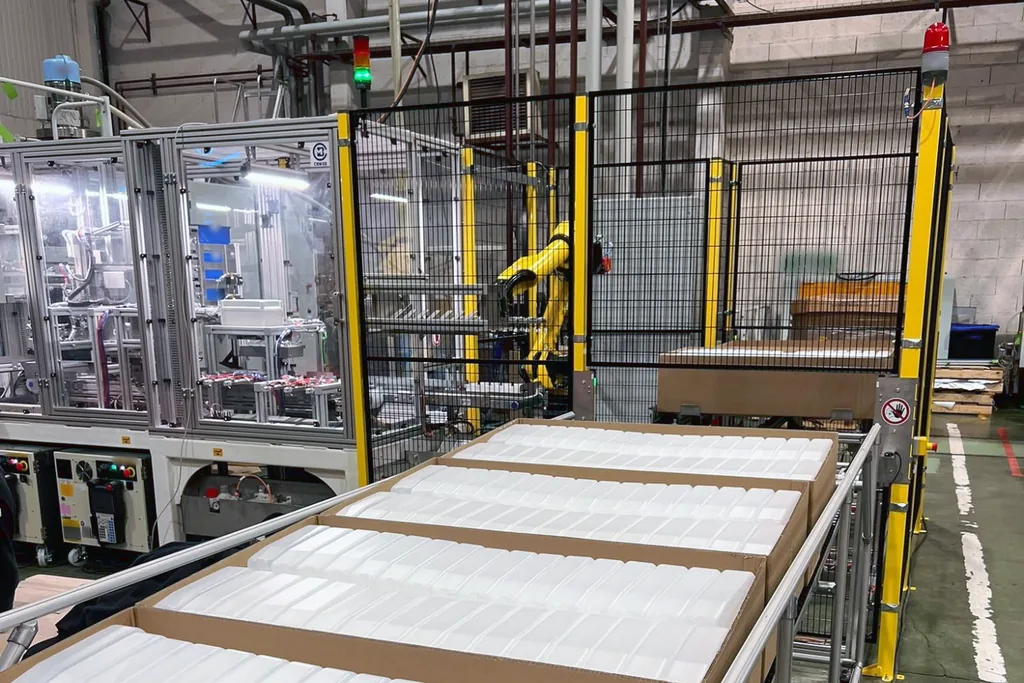
End-of-line cells: conveying and palletizing
Conveyors, buffers and robot cells that take finished products off the line: depalletizing, case packing, palletizing, wrapping and labelling of each load.
Typical processes
Process families involved
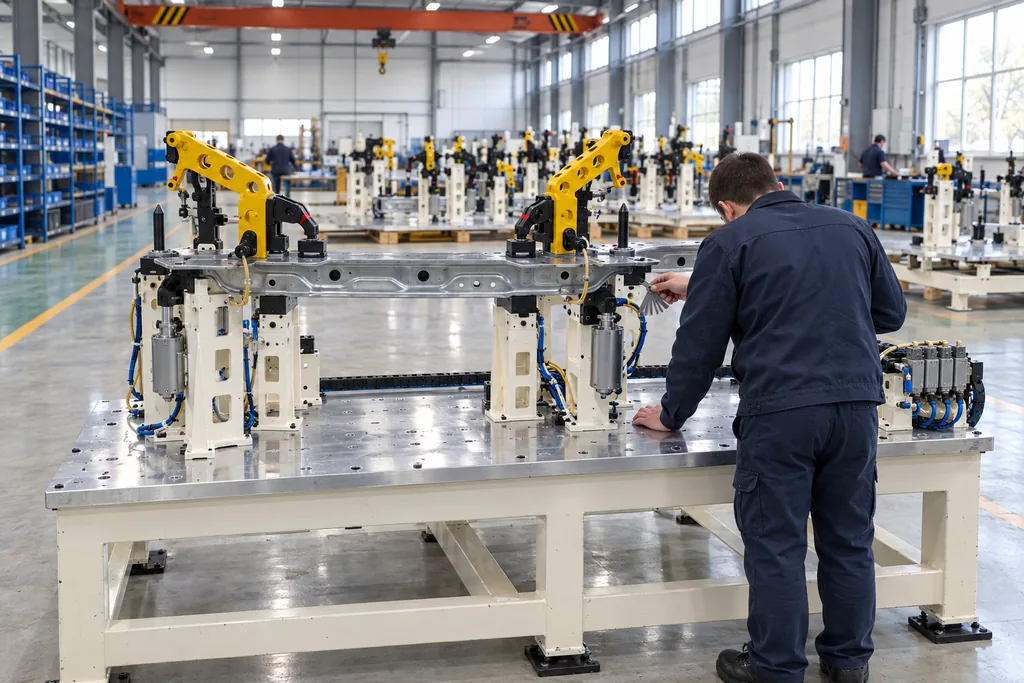
Fixtures and welding tooling
Assembly and welding fixtures designed and built for your part, for manual stations or robot cells: locating and clamping, variant nests with quick changeover, positioners and turnover units.
Typical processes
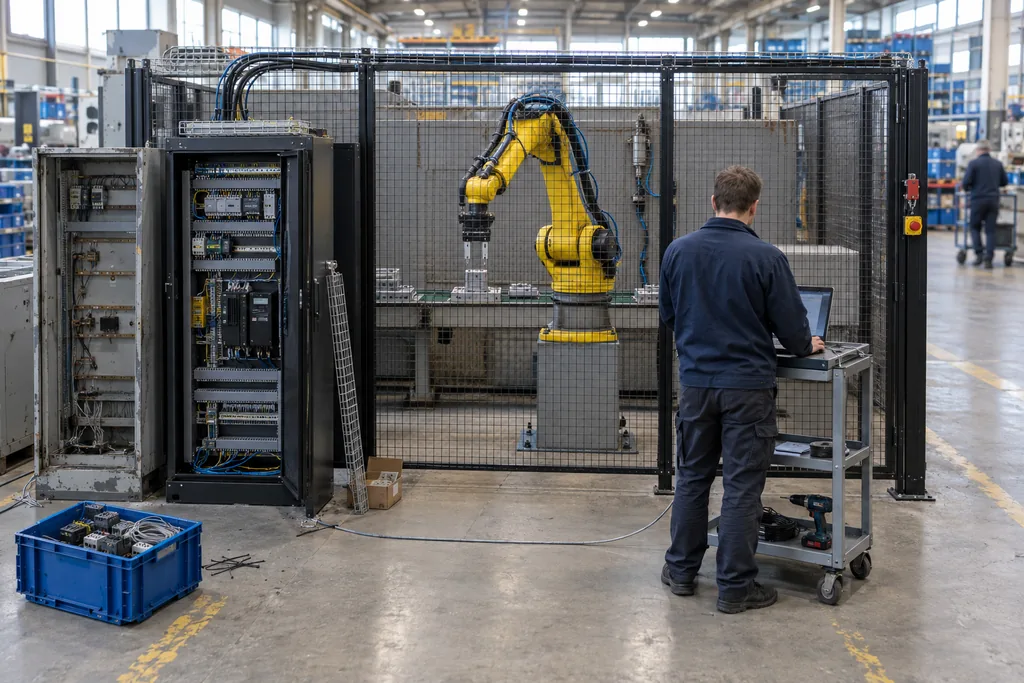
Retrofit and modernization
Upgrades of machines and lines already in your plant: new control systems, robots added or replaced, safety brought up to date and inspection added to existing stations.
Typical processes
Process families involved
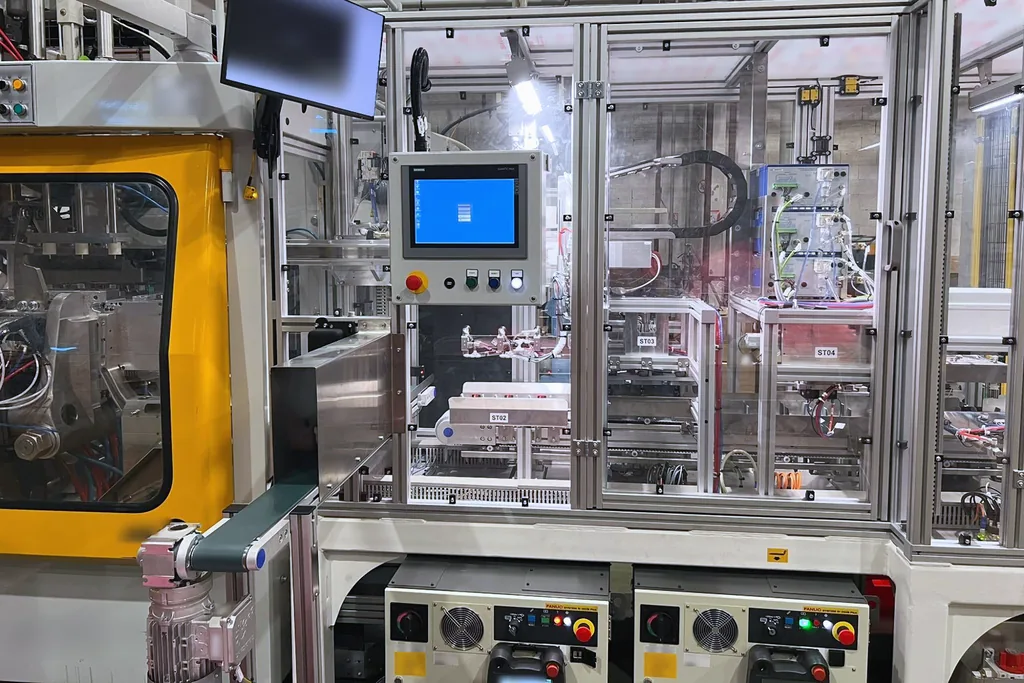
Post-mould finishing cells
Cells placed at the moulding machine that finish injection- and blow-moulded parts: degating, deflashing, trimming, punching and deburring, then inspection before the part leaves the cell.
Typical processes
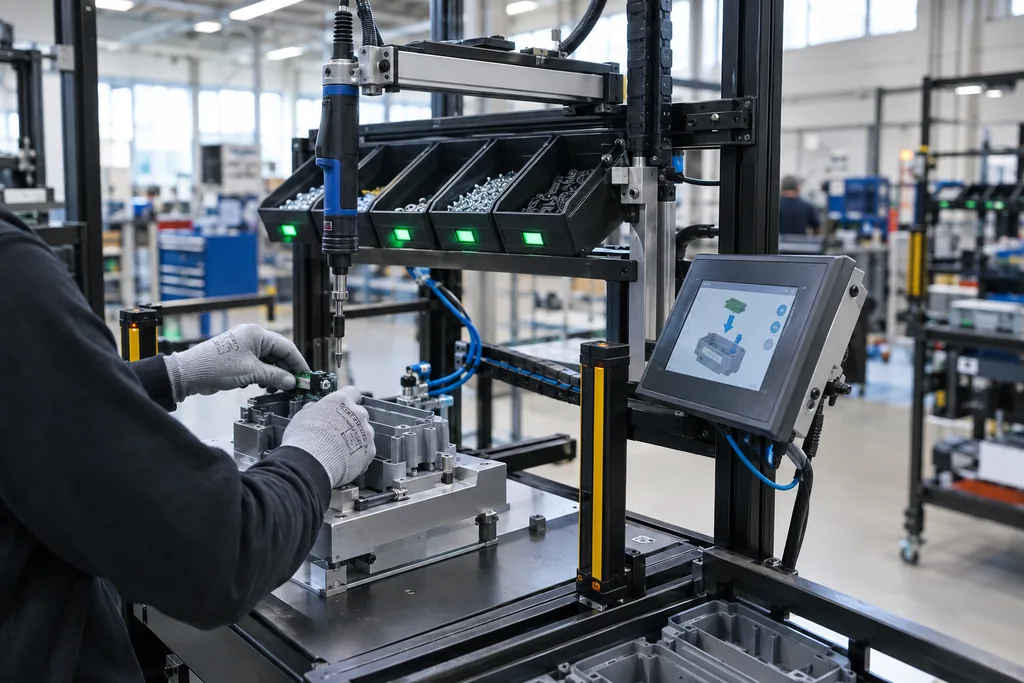
Manual and semi-automatic workstations
Ergonomic stations where the operator assembles and the station guides and checks each step: pick-to-light, error-proofing, torque-controlled screwdriving and a traceability record for every part. Suited to smaller series and many variants.
Typical processes
Process families involved

Not on this list?
These ten types cover most of what we build, not all of it. Describe your part and the operations it needs: if it is an assembly, joining, handling, inspection or test task, we can design the machine around it.