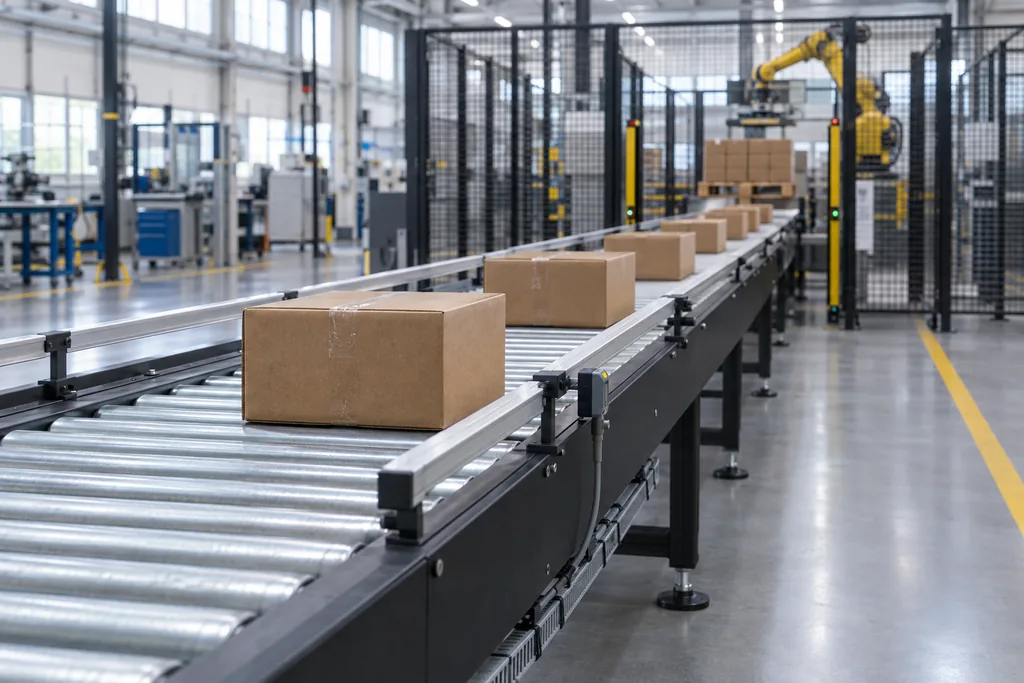
Robotic palletizing cells for end-of-line automation
Manual palletizing is still a common bottleneck. CBWEE Europe designs and integrates complete robotic cells for palletizing and other end-of-line operations.

Manufacturers are under growing pressure to raise throughput, improve ergonomics and secure reliable end-of-line processes. CBWEE Europe designs and integrates complete robotic cells for palletizing and other end-of-line operations.
The cells are compact and modular, and integrate ESTUN industrial robots. CBWEE Europe is responsible for the design and integration of the complete cell.
Why manual palletizing is a bottleneck
Manual palletizing is still common in many plants. It puts physical strain on operators, introduces variability in output and limits the ability to scale production.
What a robotic cell changes
- Ergonomics and safety: repetitive lifting is removed from the operator’s work, which reduces the risk of injury.
- Throughput and consistency: the robot delivers continuous, repeatable output, including in demanding production environments.
- Installation and maintenance: the cells are designed for quick installation, easy maintenance and short downtime.
- Adaptability: modular elements adapt the cell to different products, layouts and production speeds.
Local engineering and support
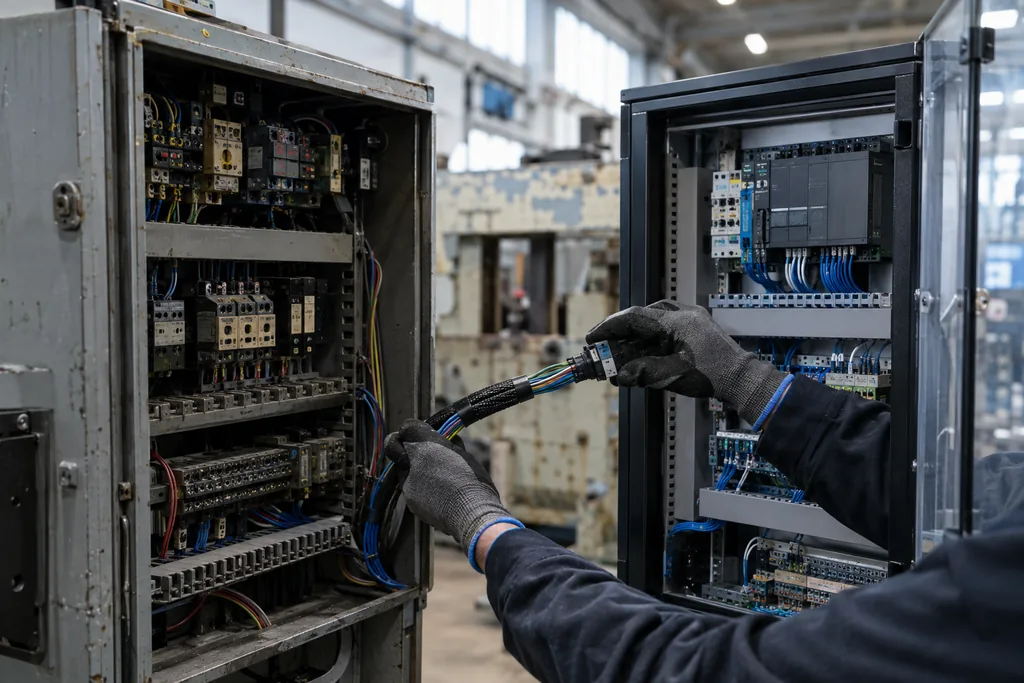
Automation projects depend on clear communication. Technical discussions, commissioning, operator training and after-sales support are handled by CBWEE Europe’s local, multilingual team, for plants across Europe.
The same approach applies to a first automated cell and to the extension of existing end-of-line operations. To discuss an application, send CBWEE Europe a description of the product, the layout and the target production speed.